Home › Sitework and Structural Concrete
Complete your project with reliable structural concrete in Phoenix, AZ. We pour equipment pads, retaining walls, piers, pedestals, and other sitework elements that support heavy loads. Our crews follow engineered drawings and use proper reinforcing, anchors, and placement methods for long term performance.
Superior Concrete Phoenix provides professional structural concrete throughout Phoenix, AZ, Arizona and the surrounding area. Our licensed, insured crew delivers safe, clean, on-time work with a free estimate before anything begins. Call (928) 756-4158 or request your free quote.
Sitework and Structural Concrete for Phoenix Projects
Superior Concrete Phoenix handles sitework and structural concrete as one integrated scope, so your project starts on solid, buildable ground and finishes with a structure that passes inspection the first time. In the Phoenix area, poor soils, extreme heat, and sudden monsoon storms are real factors, so our crews plan every phase around those conditions instead of treating this like a generic concrete job.
Sitework starts with a realistic look at your property. We review your survey, check existing elevations, access points for trucks and equipment, and how storm water currently flows. For many Phoenix lots, the challenge is hard caliche pockets mixed with loose sandy fill. We identify those conditions early so we can spec the right excavation and compaction plan instead of guessing on the fly.
On the structural concrete side, we work off engineered plans but we also field-check them against what is actually in the ground. If we encounter soft spots, buried debris, or utility conflicts, we stop and coordinate with you and the engineer before placing any concrete. That coordination prevents future settlement, slab cracking, or rework that can shut a project down.
How We Approach Sitework in Phoenix Conditions
Good structural concrete starts with disciplined sitework. On a typical Phoenix job, Superior Concrete Phoenix follows a clear sequence: layout, cut and fill, compaction, utilities coordination, and final grading.
Layout comes first. Using the survey and building plans, we pin corners, set string lines, and verify setbacks and finished floor elevations. Phoenix zoning and drainage requirements are strict, so we confirm that grades will push water away from your building and toward approved drainage points, not onto a neighbor’s lot.
Next is cut and fill. We strip organics and loose material, then cut high spots and use that soil to build up low areas where appropriate. In many Phoenix sites, we run into caliche. Instead of fighting it blindly, we determine if it can serve as competent bearing or needs to be broken and removed. Leaving a random caliche hump under a slab is a sure way to create stress points and future cracking.
Compaction is where many projects in the Valley get into trouble. We bring in plate compactors, rollers, or jumping jacks depending on the footprint and soil type. For structural areas, we target the compaction level specified by the engineer and we can coordinate density tests if your permit set calls for them. This step is non-negotiable for structural concrete that must carry loads without settlement.
We also coordinate with plumbers, electricians, and utility providers during sitework. Trenches for water, sewer, and power must be placed and backfilled correctly so they do not create soft lines under future foundations or slabs. Before we do final grading, we make sure sleeves, conduit stubs, and drain lines are in the right place and at the correct elevation so there are no surprises on pour day.
Foundations, Footings, and Structural Slabs
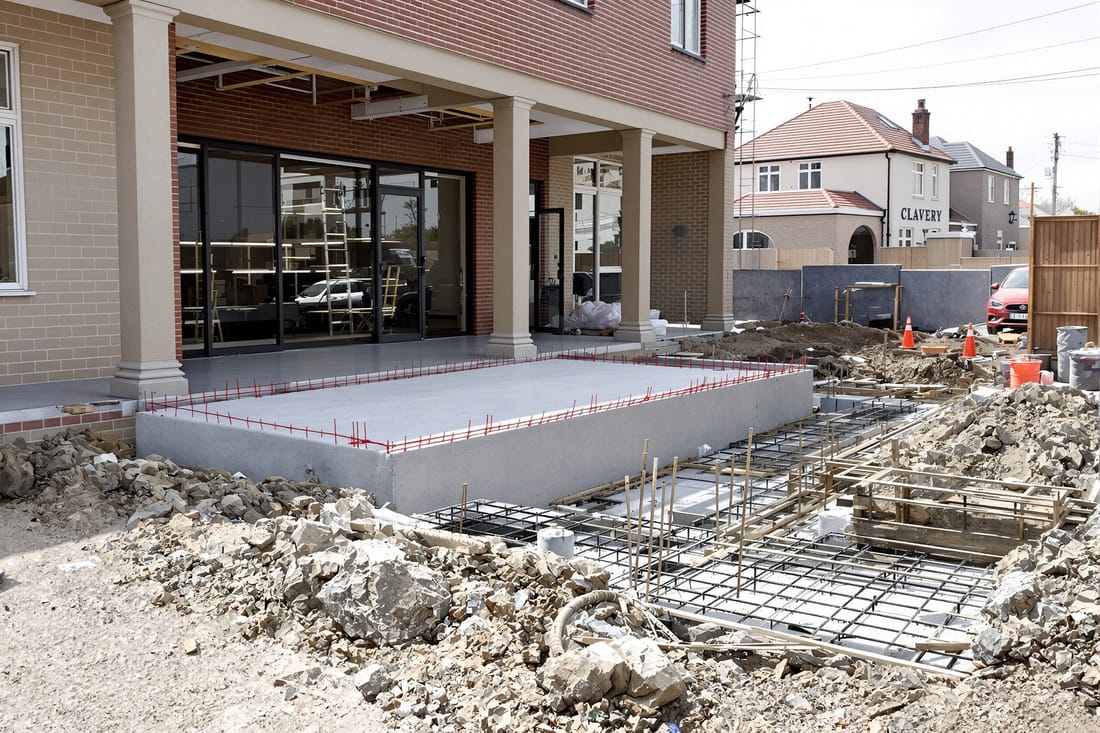
Once the site is prepped, Superior Concrete Phoenix moves into the structural concrete work: foundations, footings, grade beams, and slabs. Phoenix projects often use post-tension or rebar-reinforced slabs because of soil movement and temperature swings. We are experienced with both and can work with your engineer to implement the design correctly.
For footings and grade beams, we excavate to the specified depth and width, then clean and square the trenches. We install formwork where needed and chair the rebar so it has proper concrete cover. On many Valley lots, footing trenches want to cave in along sandy or disturbed edges, so we brace them appropriately and avoid over-excavation that would require extra concrete and cost.
Structural slabs are only as good as their reinforcement layout and joints. Whether your project calls for a traditional rebar mat, wire mesh, or a post-tension system, we place steel or tendons per the engineered spacing, keep them at the right height, and tie them off so workers and equipment do not push them down into the base. We also plan control and expansion joints in advance to line up with walls, columns, and load paths so cracks are directed and controlled, not random.
On pour day, timing matters in Phoenix heat. We schedule early morning deliveries, use appropriate slump and mix designs for the weather, and keep tools and finishing crews ready so there is no wasted time. For structural slabs, we pay particular attention to vibration around rebar and dowels so there are no hidden honeycombs or voids that could weaken the structure.
What Drives Cost and How To Avoid Surprises
For structural concrete in Phoenix, cost is driven by more than just square footage. Superior Concrete Phoenix walks clients through the real drivers before we price a job, so you know what to expect.
Soil conditions are the first big factor. If your site has expansive clays, loose fill from an older teardown, or hard caliche, the engineering might call for thicker sections, deeper footings, or additional grade beams. We can often offer value-engineering ideas within the engineer’s framework, such as adjusting footing widths versus depths, to control costs without weakening the structure.
Reinforcement and structural complexity also affect price. A simple slab-on-grade with light rebar will cost less than a heavily reinforced mat foundation, elevated decks, or multi-level columns and beams. If you have a choice in your design stage, we can discuss the cost implications of different systems so you pick what fits your budget and loading needs.
Access and logistics matter in dense parts of Phoenix or on tight infill lots. If we cannot get a full-size concrete truck close, we may need pumps or smaller loads, which adds to the bill. Poor access can also slow labor productivity. We look at this during the site visit so we can plan staging, truck routes, and pour sequences that minimize extra equipment charges.
Finally, schedule and inspections impact cost. Structural concrete requires city or county inspections at specific points, like footing rebar or post-tension cable layout. If those inspections are delayed, it can push pours and increase standby time. We coordinate with inspectors familiar with Phoenix jurisdictions so the work passes cleanly and you are not paying for crews to wait around.
Common Problems We Solve and What To Ask Before You Hire
Structural concrete failures are expensive to fix, so it pays to ask the right questions before you hire anyone. Superior Concrete Phoenix has been called onto too many jobs to repair others’ shortcuts, so we build those lessons into our process.
One common problem is uncontrolled cracking. In our climate, slabs shrink and expand with temperature, and if joints, reinforcement, and curing are not handled correctly, cracks appear where you least want them. We address this with planned joint layouts, proper reinforcement cover, timely saw cutting, and curing practices that account for hot, dry air, such as curing compounds or moisture retention methods when appropriate.
Another issue is settlement beside or under foundations. This often traces back to rushed sitework, poor backfill around utilities, or skipping compaction where a non-structural slab was later loaded with heavy equipment or storage. When we handle both sitework and structural concrete, there is no finger pointing. We control the base, the compaction, and the pour, and we can stand behind the finished product.
Before you hire a contractor for structural concrete, ask to see how they document rebar placement, anchor bolt locations, and inspections. We take photos before every major pour, mark critical embeds and dowels, and confirm elevations with a laser. This record helps if there is ever a question about where a line is, where you can drill, or how loads are being carried.
Also ask about local experience. Phoenix permitting, dust control rules, and monsoon-season planning are different from cooler or wetter regions. Our crews know how to protect freshly placed work from sudden storms, when to postpone a pour because wind will ruin the finish, and how to keep dust from excavation under control so your job stays compliant and your neighbors are not calling the city. That local knowledge is what turns a structural concrete plan on paper into a structure that stands up for decades in Arizona conditions.