Home › Commercial Concrete Slabs and Flatwork
Install durable commercial concrete slabs in Phoenix, AZ that stand up to traffic and heavy loads. We place and finish warehouse slabs, equipment pads, and exterior flatwork with proper reinforcement and joint layouts. Our team delivers consistent flatness and finishes for a range of commercial uses.
Superior Concrete Phoenix provides professional commercial concrete slab throughout Phoenix, AZ, Arizona and the surrounding area. Our licensed, insured crew delivers safe, clean, on-time work with a free estimate before anything begins. Call (928) 756-4158 or request your free quote.
Commercial Concrete Slabs in Phoenix Built for Real-World Use
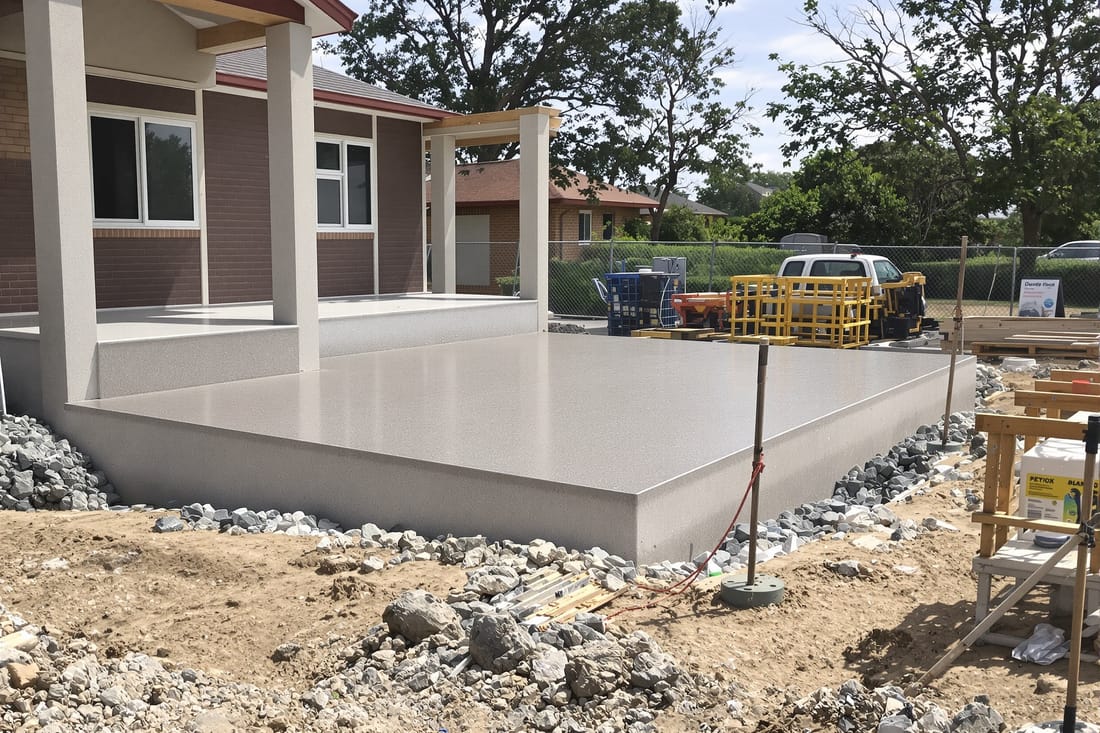
When your business relies on a concrete slab, “good enough” is not good enough. At Superior Concrete Phoenix, we focus on commercial concrete slabs and flatwork that hold up to Phoenix heat, heavy loads, and daily traffic.
We pour slabs for warehouses, tilt-up buildings, retail centers, restaurants, vehicle bays, equipment pads, and multifamily common areas across the Valley. That includes new construction, additions to existing buildings from the 1970s and 1980s, and replacement of failed slabs in older industrial parks near I-17 and I-10.
A commercial concrete slab is more than a flat surface. It has to be engineered for the loads it will carry, the soil it sits on, and our extreme temperature swings. We work with structural plans when an engineer is involved, or we help your team size thickness, reinforcement, and joint layout based on your use. Whether you need a laser-leveled interior slab for pallet racking or a broom-finished parking area that drains cleanly during monsoon storms, we tailor the mix, reinforcement, and finishing methods to your specific project.
We understand that most businesses in Phoenix cannot afford downtime. We schedule pours and cutting around your operations, coordinate with other trades, and plan access routes so customers, tenants, or trucks can still move safely around the site while work is underway.
How We Install a Durable Commercial Concrete Slab in Phoenix
Our process is designed for Phoenix conditions and commercial timelines, from the first site visit to final cure.
1. Site evaluation and planning: We walk the site to look at access, existing structures, utilities, and drainage. In Phoenix, we pay close attention to caliche layers, existing fill, and how stormwater moves during monsoon season. If the slab will support racks, machinery, or vehicle lifts, we confirm point loads and edge conditions with your engineer.
2. Excavation and subgrade prep: We remove organic material, soft spots, and any loose fill. On older commercial lots, especially around central Phoenix, we often find mixed backfill, construction debris, or old slab remnants that need to be removed before we compact. We then build a stable base with compacted ABC or other specified aggregate, moisture-condition it, and proof-roll so you are not pouring expensive concrete over a weak subgrade.
3. Vapor barriers and reinforcement: For interior slabs or any area where moisture transmission is a concern, we install a vapor barrier or retarder per plan. Then we place rebar or welded wire reinforcement on chairs so it stays in the proper position, not sitting on the ground. For heavy-duty slabs such as warehouse drive aisles, we often use thicker rebar grids, dowels at construction joints, and sometimes doweled basket assemblies at saw cuts.
4. Forming, mix selection, and placement: We set forms to the correct elevation, double-check slopes for drainage, and coordinate final slab height with door thresholds and existing floors. Concrete mix design is critical in Phoenix. We typically use 4,000 psi or higher mixes for commercial slabs, specify proper slump for placement method, and pay attention to set times in hot weather. Retarders, shade, early morning pours, and continuous placing help avoid cold joints and rapid surface drying.
5. Finishing, jointing, and curing: Depending on use, we provide trowel, broom, or specialty finishes. For forklift aisles and retail floors that may receive epoxy or polish later, we aim for tight, flat surfaces with controlled finishing passes. We saw control joints at the right spacing and depth to direct inevitable shrinkage cracks into planned lines. Then we apply curing compounds or wet-curing methods suited to the project so the slab gains strength evenly and resists surface dusting or early cracking.
Flatwork Options: Parking, Loading Areas, Walkways, and More
Commercial flatwork includes much more than interior slabs. Superior Concrete Phoenix handles all the exterior concrete surfaces that tie your site together.
For parking lots, loading docks, and dumpster pads, we design slab thickness and reinforcement based on traffic types. A light-use office parking row is very different from a drive lane where delivery trucks back into bays all day. We use thicker sections and stronger reinforcement in high-stress areas such as truck aprons and trash enclosures, where rutting and slab edge failure are common if the design is too light.
Walkways, ADA ramps, and outdoor seating areas are detailed for both function and appearance. We keep slopes within ADA limits and make sure water drains away from buildings. On many Phoenix retail and restaurant projects, owners ask for decorative touches, so we may use colored concrete, border bands, or exposed aggregate where it makes sense. We still build the flatwork like a commercial slab, with proper base, reinforcement where needed, and correctly spaced joints.
For industrial and flex spaces in areas like Deer Valley or the West Valley, we frequently replace spalled or settled panels at dock doors and in front of roll-up bays. We demo the damaged sections, prepare and compact the subgrade, install dowels into existing concrete for load transfer, and pour new panels that blend in but perform far better than the originals.
We also pay special attention to transitions between concrete and asphalt, which are common in Phoenix shopping centers and office parks. Proper thickening, keying, and reinforcement at the joint helps prevent the concrete edge from breaking apart under tires.
What Affects the Cost of a Commercial Concrete Slab in Phoenix
There is no one-price-fits-all cost for a commercial concrete slab, because several local factors have a real impact on budget.
Slab thickness and reinforcement: The biggest drivers are thickness, concrete strength, and the type and amount of rebar or wire mesh. A light-duty 4 inch walkway costs less per square foot than a 6 inch warehouse slab with rebar on a tight grid and doweled joints. If you need heavy equipment pads, pit infills, or mezzanine support slabs, expect higher steel content and more labor.
Site conditions and access: Tight sites in older parts of Phoenix, such as infill projects near downtown or along older arterial roads, can increase labor and pumping costs because trucks cannot get close to the pour area. Poor or contaminated subgrade, buried debris, or existing asphalt and old concrete that must be removed will also affect pricing.
Finishing and tolerances: High flatness requirements for racking systems, future polished concrete, or sensitive equipment need more experienced crews, more passes with finishing machines, and better joint layout. Decorative finishes, colored concrete, and special surface prep for coatings or sealers add cost but can be worth it when appearance and performance matter.
Weather and scheduling: During Phoenix summers, we often pour in the early morning, bring in additional labor for faster placement, use admixtures to control set times, and sometimes tent or shade critical areas. Complex staging to keep your business open during construction can also add to labor. We are transparent about these factors and go over options with you so you know where your money is going and where you can safely save without sacrificing long-term performance.
Common Problems With Commercial Slabs (and How We Prevent Them)
If you already have a slab that is cracked, uneven, or failing at the joints, you have seen what happens when design or installation does not match real-world conditions. Superior Concrete Phoenix is often called to fix these issues, so we build new work to avoid them from the start.
Premature cracking: All concrete cracks, but uncontrolled random cracks are usually a sign of poor joint layout, weak subgrade, or bad curing. We manage this with proper joint spacing, consistent saw cutting, and solid base prep. On larger slabs such as distribution centers or manufacturing floors, we coordinate joint plans with racking layouts and traffic paths to minimize joint impact and maintenance.
Curling and slab movement: In Phoenix, wide temperature swings and low humidity can cause slab curling, particularly at edges and corners. We address this by using appropriate slab thickness, reinforcement, and joint layout, and by following curing practices that reduce moisture and temperature differentials between the top and bottom of the slab.
Surface dusting and scaling: When slabs are finished too early, overworked with water, or not cured correctly, the surface can weaken and start to powder or flake. We train our finishers to time their passes correctly, especially on hot, windy days, and we use curing compounds or wet-curing methods that match the job.
Drainage and ponding: One of the biggest complaints we hear from Phoenix property managers is standing water after a storm, especially in low spots near entries and loading areas. During layout and forming, we run levels carefully and verify slopes before we pour. For large exterior flatwork, we may recommend added area drains, trench drains, or subtle slope adjustments to keep water moving. Our goal on every commercial concrete slab is simple: build it once, build it right, and keep your business operating without slab headaches for many years.